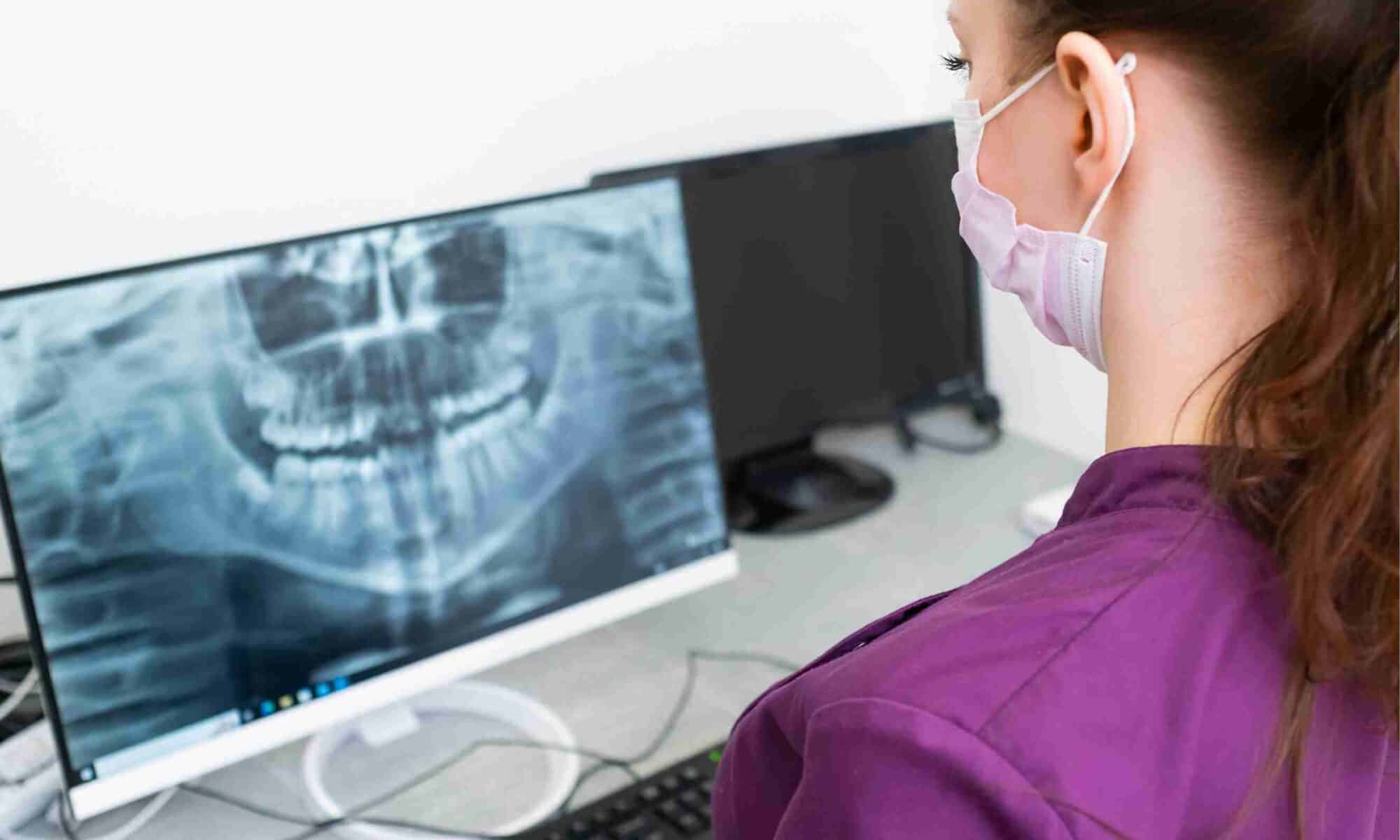
Artificial intelligence is changing orthodontics.
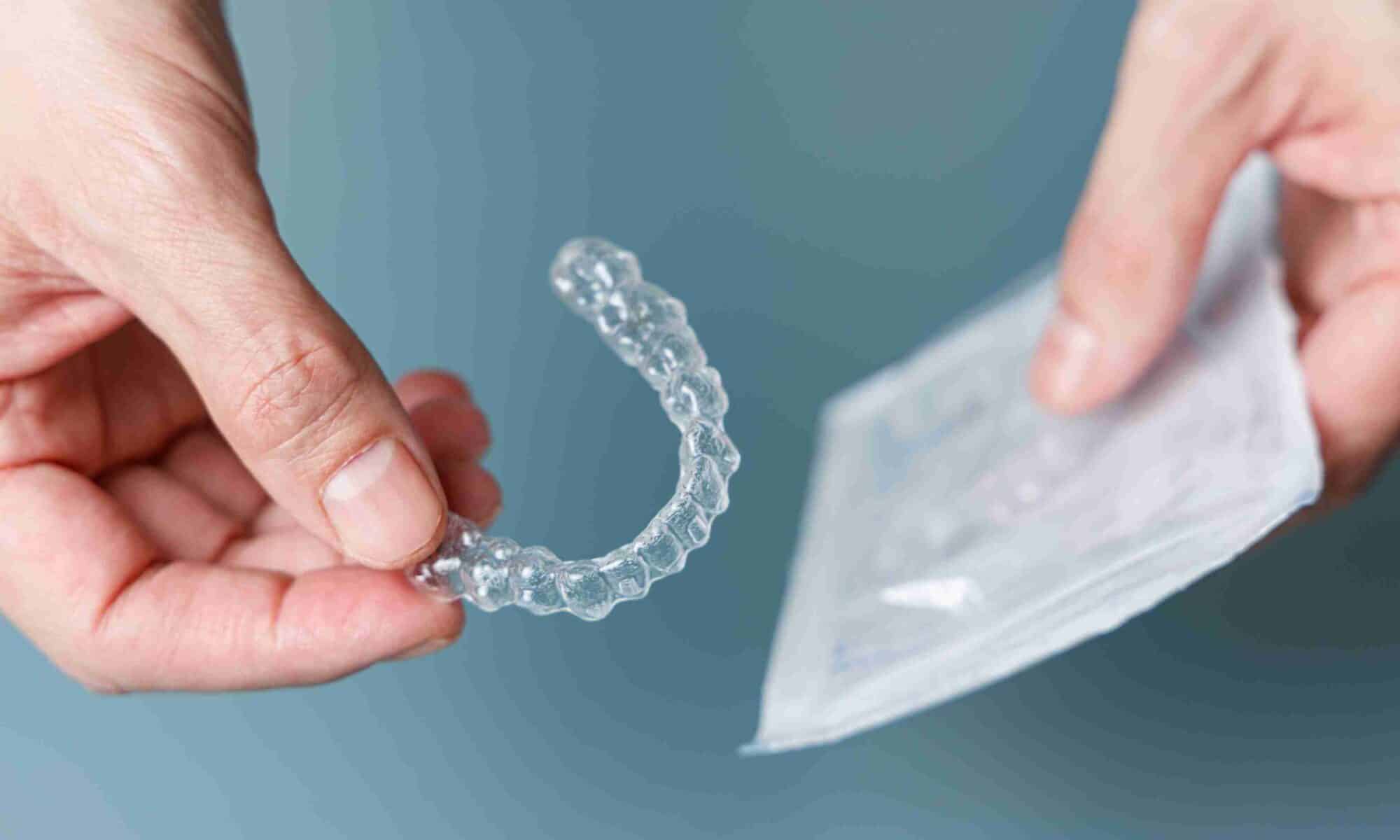
AI can analyze dental images, identify tooth positions, monitor aligner progress and help orthodontic teams evaluate whether teeth are tracking as expected.
That raises an obvious question for someone considering Invisalign:
If AI can analyze my teeth and create a treatment plan, do I still need an orthodontist?
For patients in Jericho, NY, the answer is straightforward:
AI can assist with orthodontic treatment, but it does not replace the clinical judgment of an orthodontist.
The distinction matters because straightening teeth isn’t simply a matter of recognizing where each tooth is located. Treatment also involves your bite, jaw relationship, roots, bone, gums, facial growth, tooth movement limits and how your teeth respond throughout treatment.
What Can AI Actually Do in Orthodontics?
AI is already being used in real orthodontic workflows.
For example, Invisalign’s Virtual Care AI can analyze patient-submitted photographs between appointments and automatically identify potential tracking issues. The system can send notifications when problems are detected, while Align-trained personnel verify AI results.
AI can therefore help with tasks such as:
- Analyzing dental images
- Identifying tooth positions
- Monitoring aligner fit
- Detecting potential tracking problems
- Organizing treatment data
- Simulating potential tooth movements
- Supporting treatment planning
- Reducing some routine monitoring work
That’s significant progress.
But notice the wording: AI-assisted, not AI-independent.
Can AI Create an Invisalign Treatment Plan?
AI and digital orthodontic software can contribute substantially to treatment planning.
Modern aligner workflows use digital scans, 3D models and software to simulate how teeth might move through a series of aligners. However, generating a digital simulation isn’t the same as independently deciding what treatment a patient actually needs.An orthodontist must first determine whether clear aligners are appropriate.
A patient may have crowding, spacing, an overbite, underbite, crossbite, impacted teeth, periodontal concerns, jaw discrepancies or other factors that influence treatment.The software can process the information.
The orthodontist interprets what the information means for the patient.
Why Can’t AI Simply Replace the Orthodontist?
Because orthodontic treatment involves more than tooth coordinates. Consider two patients with similar-looking front teeth. One may have healthy gums and adequate bone support.
The other may have periodontal disease, an unusual root position, significant skeletal discrepancy or a bite problem that requires a different approach. A photograph or digital scan alone doesn’t provide the complete clinical picture.
An orthodontist evaluates the patient, not just the digital model.
That includes considering:
- Facial growth
- Jaw relationships
- Bite function
- Gum and periodontal health
- Tooth roots
- Bone support
- Existing dental work
- Airway and oral habits when clinically relevant
- Treatment predictability
- Patient-specific risks
AI can assist with portions of this process, but it doesn’t eliminate the need for diagnosis and professional accountability.
What Happens If Teeth Don’t Track?
This is one of the most important reasons human oversight remains necessary.
Sometimes teeth don’t move exactly as predicted. An aligner may stop fitting correctly. A tooth may rotate more slowly than expected. An attachment may come loose. A patient may not wear the aligners for the prescribed amount of time.
The treatment plan may then need to change.Invisalign’s own Virtual Care AI is designed partly to identify potential tracking problems between visits, but the system is intended to support clinical care rather than eliminate it.
An orthodontist can decide whether the appropriate response is:
Continue → modify → rescan → add refinements → change mechanics → or reconsider the treatment approach.
That’s clinical decision-making.
Is AI More Accurate Than an Orthodontist?
That’s the wrong comparison.AI and orthodontists perform different functions. AI can be extremely useful at processing large amounts of structured visual information consistently.
An orthodontist brings clinical training, diagnosis, experience and responsibility for applying that information to an individual patient.
The most useful model is therefore:
AI + orthodontist
rather than:
AI vs. orthodontist.
Current research into AI-assisted clear-aligner treatment planning is still developing. Even newer research systems describe themselves as prototypes requiring additional clinical validation before real-world deployment.
Is AI Orthodontics Safe?
AI itself isn’t what determines whether orthodontic treatment is safe.
The important question is how the technology is used and who is responsible for the treatment.
Clear aligners are medical devices, and the FDA maintains a regulatory framework for sequential aligners. The current Invisalign System received an FDA 510(k) decision in August 2025.
That doesn’t mean every AI-generated treatment plan is automatically appropriate.
Patients should still know:
- Who diagnosed the orthodontic problem?
- Who reviewed the treatment plan?
- Who monitors tooth movement?
- Who handles complications?
- Who makes treatment changes?
- Who is responsible if the treatment doesn’t progress as expected?
Those are much more useful questions than simply asking whether a company uses AI.
What About Mail-Order or App-Based Orthodontics?
Technology can make orthodontic care more convenient, but convenience shouldn’t eliminate necessary clinical evaluation.
- A smartphone camera can capture useful information.
- A digital scanner can create an impressive 3D model.
- AI can analyze images quickly.
But none of those technologies automatically establishes that a patient is an appropriate candidate for a specific orthodontic treatment. For complex cases especially, professional diagnosis and monitoring remain important.
What Should Patients Ask About AI Invisalign?
If you’re considering Invisalign in Jericho, Syosset, Plainview, Hicksville, Old Westbury, or nearby Long Island communities, ask your orthodontist how technology is actually being used.
Good questions include:
- Does AI help monitor my treatment?
- Who approves my treatment plan?
- Will an orthodontist review my scans and progress?
- What happens if my teeth stop tracking?
- Will my gums, bite and jaw relationship be evaluated?
- How are refinements handled if my teeth don’t move as predicted?
These questions tell you much more about the quality of care than the phrase “AI-powered orthodontics.”
At Khan Orthodontic Group, patients have access to Invisalign alongside traditional orthodontic treatment options. The practice serves Long Island communities including Jericho and surrounding areas.
The Jericho office is located at 500 N Broadway, Suite 146, Jericho, NY 11753. Khan Orthodontic Group – Jericho Office
If you’re considering clear aligners, schedule a free smile consultation and ask how digital technology and orthodontic expertise work together in your treatment.
You can also meet Dr. Sabeeh Khan and Dr. Azita Naghavi Khan to discuss your treatment goals.
The Future Is Probably AI-Assisted Orthodontics
AI will almost certainly become more important in orthodontics.
It can help orthodontists process information faster, monitor patients remotely and identify potential problems earlier. But that doesn’t necessarily mean the orthodontist disappears.
The more realistic future is one where AI handles increasingly sophisticated analytical tasks while orthodontists focus more heavily on diagnosis, treatment strategy, complex decision-making and patient care.
That’s already visible in Invisalign’s AI-assisted monitoring workflow, where automated analysis is combined with trained human verification.For patients, that’s a useful distinction.
You don’t need to choose between technology and an orthodontist. The strongest treatment model can use both.
The Bottom Line
AI can assist with Invisalign treatment planning and monitoring, but it should not be viewed as a replacement for an orthodontist.
AI is increasingly capable of analyzing images, tracking tooth movement and supporting digital treatment workflows.
But orthodontic treatment requires more than identifying where teeth are located.
Someone needs to determine whether the treatment is appropriate, assess the patient’s complete oral and facial condition, interpret the digital information, manage unexpected tooth movement and make clinical decisions when the original plan needs to change.
For patients considering Invisalign in Jericho, the better question isn’t:
“Does my orthodontist use AI?”
Ask:
“How does my orthodontist use AI while keeping clinical judgment at the center of my treatment?”
That is where the real value of AI orthodontics lies.
Frequently Asked Questions (FAQ’s)
Can AI plan Invisalign without an orthodontist?
AI can assist with digital treatment planning, but orthodontic diagnosis, treatment decisions and clinical oversight should not be replaced by an algorithm.
Does Invisalign use artificial intelligence?
Yes. Invisalign’s Virtual Care AI can assist with remote monitoring by analyzing patient-submitted images and identifying potential aligner-tracking issues, with trained personnel verifying AI results.
Can AI tell if Invisalign is working?
AI can help detect potential tracking problems from patient-submitted images, but an orthodontist remains responsible for evaluating the clinical situation and deciding what action is appropriate.
Is AI orthodontics safe?
AI can be safely used as a clinical-support technology, but safety depends on appropriate diagnosis, professional oversight, monitoring and management of the individual patient’s treatment.
Should I choose an AI Invisalign provider or an orthodontist?
Choose an orthodontic provider who can combine appropriate digital technology with qualified clinical diagnosis, treatment planning and ongoing supervision.