If you’re considering Invisalign, you’ve probably researched how long treatment takes, whether aligners hurt, and how difficult they are to clean.
But there’s a newer question that patients are starting to ask:
“Am I putting plastic in my mouth for 20 to 22 hours a day and could it release microplastics?”
It’s a reasonable question.
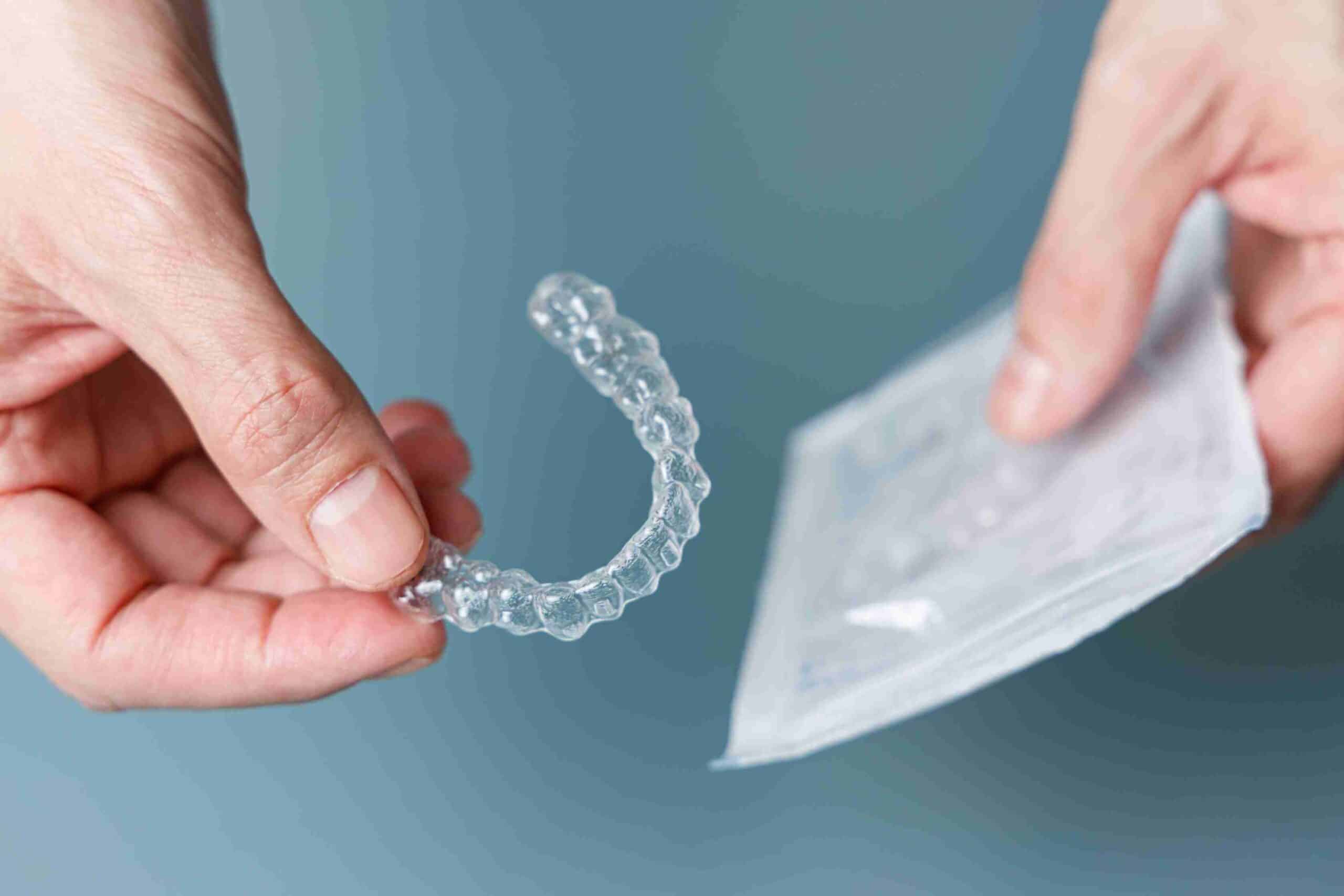
Clear aligners are made from polymer-based plastic materials and remain in close contact with your teeth, gums, and saliva for much of the day.
Recent research has confirmed that microplastic particles can be released from clear orthodontic aligners under certain conditions.
But that doesn’t mean Invisalign has been shown to cause illness or that patients should automatically avoid clear aligners.
Science is still developing.
For patients in Merrick, NY, understanding what researchers actually know and what they don’t, is more useful than either dismissing the concern or assuming the worst.
Can Invisalign Release Microplastics?
Research indicates that clear orthodontic aligners can release microplastic particles during use.
A 2026 scoping review examined research published over the previous decade and identified six studies showing evidence of microplastic release from clear aligners. The researchers concluded that the health implications remain uncertain and called for more extensive studies conducted in real-world human conditions.
A 2025 systematic review reached a similar conclusion: microplastic release has been documented, but there isn’t enough evidence to determine whether the exposure creates a clinically significant health risk.
That distinction is important.
Detection is not the same as demonstrated harm.
Why Would Clear Aligners Release Plastic Particles?
Clear aligners are exposed to several forces during everyday use.
They experience:
- Saliva exposure
- Temperature changes
- Chewing forces
- Contact with teeth
- Friction against oral tissues
- Cleaning and handling
- Repeated insertion and removal
Researchers have therefore investigated whether material composition, manufacturing method, and wear time influence particle release.
A 2026 in-vitro study specifically examined how wear time, material composition, and manufacturing processes may affect microplastic detachment from clear aligners.
This doesn’t mean that every aligner releases the same amount of particles.
Different materials and manufacturing processes can behave differently.
Does This Mean Invisalign Is Unsafe?
There is currently no good evidence showing that Invisalign treatment causes illness because of microplastic exposure.
This is where online discussions can become misleading.
The existence of microplastics in a product doesn’t automatically establish that the amount released is dangerous, that the particles are absorbed by the body, or that they cause disease.
The 2026 scoping review explicitly concluded that although microplastic release from transparent aligners has been demonstrated, the health risk remains unknown.
Researchers need to answer additional questions:
- How many particles are released during normal treatment?
- What particle sizes are involved?
- How does release change over time?
- Are particles swallowed?
- Are they absorbed?
- What happens to them inside the body?
- Does exposure create measurable health effects?
Those questions haven’t been completely answered.
What Does the FDA Say About Clear Aligner Materials?
Clear aligners are medical devices subject to regulatory requirements.
For example, an FDA 510(k) clearance document for a clear-aligner device identifies its plastic sheet material as a polymer and describes the material as having undergone biocompatibility testing for mucosal contact.
That doesn’t mean every clear aligner on the market is identical.
It also doesn’t mean regulatory clearance proves that no particles can ever be released.
It means material safety and biocompatibility are considered as part of medical-device evaluation.
Microplastic research is addressing a newer question: what happens to polymer materials at the particle level during prolonged use?
Does Wearing Aligners for 20-22 Hours Increase Exposure?
Potentially, longer wear means longer contact between the material and the oral environment.
But researchers have not established a simple formula such as:
“More hours = dangerous exposure.”
Actual exposure depends on the material, aligner condition, wear duration, cleaning routine, manufacturing process, and other variables.
Khan Orthodontic Group notes that Invisalign treatment typically requires aligners to be worn around 20-22 hours per day to maintain the planned treatment progression.
That’s why proper maintenance matters.
Your aligners should be cleaned according to your orthodontist’s instructions and replaced according to the treatment schedule.
Can Damaged or Scratched Aligners Release More Particles?
Potentially, but the exact relationship between everyday scratches and clinically meaningful microplastic exposure has not been established.
An aligner can become scratched through aggressive cleaning or repeated wear.
That’s another reason not to scrub clear aligners aggressively with abrasive products unless your orthodontist specifically recommends them.
Follow the cleaning instructions provided by your orthodontic office.
If an aligner becomes visibly cracked, damaged, unusually rough, or doesn’t fit properly, contact your orthodontist instead of continuing to wear a damaged appliance indefinitely.
Should You Stop Invisalign Because of Microplastics?
Current evidence does not justify stopping prescribed Invisalign treatment solely because microplastics have been detected in clear aligners.
Orthodontic treatment provides an established benefit: controlled movement of teeth to improve alignment and bite.
Khan Orthodontic Group explains that Invisalign uses customized aligners and controlled forces to move teeth according to a planned treatment sequence.
The appropriate decision is therefore a balance between known benefits and an emerging theoretical concern.
At present, the benefit of appropriately prescribed orthodontic treatment is established, while the long-term health significance of microplastic exposure from aligners remains uncertain.
How Can Merrick Patients Reduce Unnecessary Aligner Exposure?
You don’t need to abandon clear aligners to practice sensible precautions.
Clean your aligners properly
Follow the cleaning method recommended by your orthodontist.
Avoid abrasive cleaning techniques that could unnecessarily damage the plastic.
Don’t use hot water
Very hot water can deform clear aligners and affect their fit.
Remove aligners when eating
Unless your orthodontist gives you different instructions, remove clear aligners before eating.
Follow the replacement schedule
Don’t continue wearing an old aligner indefinitely because it still “looks fine.”
Your orthodontic treatment plan determines when each tray should be replaced.
Don’t wear visibly damaged trays
If an aligner cracks or becomes significantly damaged, contact your orthodontist.
What About the Microplastics We Encounter Elsewhere?
This is an important context.
Microplastics are not unique to orthodontic aligners.
Research has detected plastic particles in many environmental and consumer exposures, and scientists are still working to understand their significance to human health. That doesn’t make aligner exposure irrelevant. It means patients should avoid viewing clear aligners in isolation.
The relevant question is not:
“Does this plastic contain zero particles?”
It is:
“Does normal use create an exposure that has been demonstrated to cause harm?”
At present, research has not established that clear-aligner microplastic release causes clinically significant disease.
What Should Merrick, NY Patients Ask Their Orthodontist?
If you’re considering Invisalign in Merrick, NY, ask practical questions during your consultation:
- What material are my aligners made from?
- How should I clean them?
- How often will I replace each tray?
- What should I do if an aligner becomes damaged?
- How many hours should I wear them?
- Are there alternatives if I prefer braces?
- How will my treatment progress be monitored?
At Khan Orthodontic Group, Invisalign is one of the orthodontic treatment options offered at its Merrick, Jericho, and Maspeth offices. The practice emphasizes customized treatment planning and uses Invisalign alongside traditional orthodontic options.
For patients in Merrick, Bellmore, Wantagh, East Meadow, Freeport, Garden City, and nearby Long Island communities, discussing material and treatment concerns directly with the orthodontist is more useful than relying on social-media claims.
The Merrick office is located at 28 Merrick Ave, Merrick, NY 11566.
If you’re considering clear aligners and have concerns about material safety, schedule a free smile consultation.
You can also meet Dr. Sabeeh Khan and Dr. Azita Naghavi Khan and discuss whether Invisalign or another orthodontic option is appropriate for your smile.
The Bottom Line
Yes, research has detected microplastic release from clear orthodontic aligners.
No, current evidence does not establish that Invisalign causes disease or that clear-aligner treatment is unsafe because of microplastic exposure.
That’s the scientifically responsible distinction.
A 2025 systematic review identified the release of microplastics but concluded that their health impact remains uncertain. A newer 2026 scoping review reached the same broad conclusion and called for more research under real-world conditions.
For now, patients should focus on the factors that are established:
- Wear aligners as prescribed.
- Clean them correctly.
- Replace them on schedule.
- Avoid damaging the material.
- Keep your orthodontic appointments.
If microplastic exposure is a concern for you, bring it up before starting treatment.
A good orthodontic consultation should address both the known benefits of treatment and the legitimate questions patients have about emerging research.
Frequently Asked Questions (FAQ’s)
Can Invisalign aligners release microplastics?
Yes, research has detected microplastic release from clear orthodontic aligners, although the amount and health significance of that exposure remain uncertain.
Are Invisalign microplastics harmful?
There is currently insufficient evidence to establish that microplastics released from Invisalign or other clear aligners cause clinically significant harm in patients.
Should I stop wearing Invisalign because of microplastics?
Current evidence does not justify stopping prescribed Invisalign treatment solely because microplastic release has been detected from clear aligners.
How can I reduce wear and damage to my Invisalign aligners?
Follow your orthodontist’s cleaning instructions, avoid abrasive cleaning methods and hot water, remove aligners when eating, and replace trays according to your treatment plan.
Are braces safer than Invisalign because they don’t use plastic trays?
Braces and clear aligners use different materials and have different advantages and considerations; there is currently no evidence showing that switching from Invisalign to braces is necessary because of microplastic concerns.