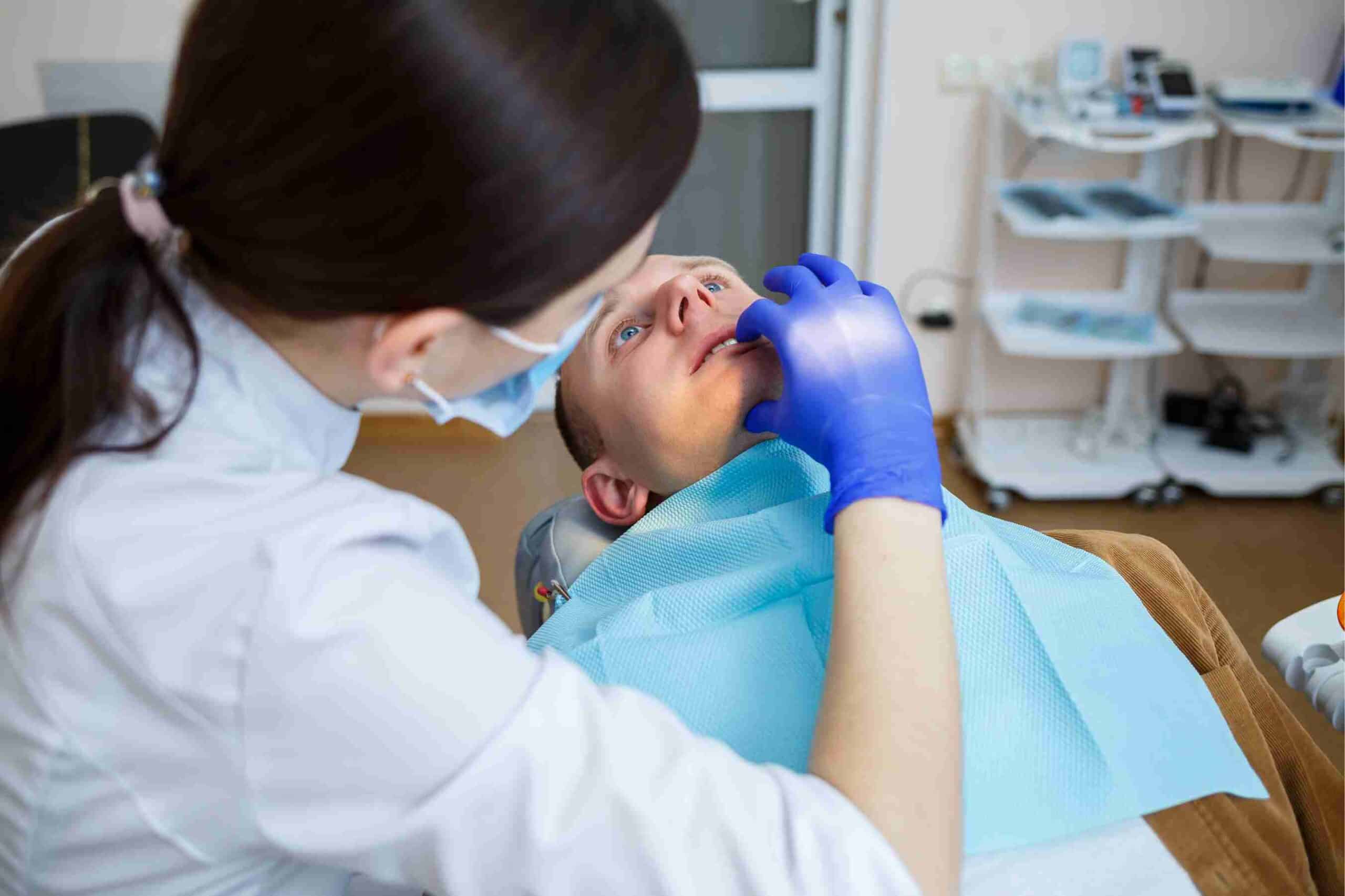
If you’ve spent time on TikTok, Instagram, or YouTube, you’ve probably seen the mewing trend.
The concept sounds simple: place your tongue against the roof of your mouth, maintain the position consistently, and supposedly your jawline will become sharper while your teeth and facial structure improve.
For someone in Jericho, NY who isn’t happy with their smile or side profile, that can sound like an attractive alternative to braces or Invisalign.
But does mewing actually work?
Current evidence does not show that DIY mewing can reliably reshape your jawline or straighten crooked teeth.
There is an important distinction between healthy tongue posture and the online claims surrounding “mewing.” Understanding that difference can help you avoid spending months trying to force a change that may not address the underlying orthodontic problem.
What Exactly Is Mewing?
Mewing refers to a tongue-posture technique in which the tongue is intentionally held against the roof of the mouth.
Online, it is often promoted as a way to:
- Define the jawline
- Make the chin appear stronger
- Widen the upper jaw
- Straighten teeth
- Improve facial symmetry
- Change facial structure
The American Association of Orthodontists says there is currently no scientific evidence supporting these broad jawline-sculpting claims. Facial structure is influenced by genetics, growth, bone development, tooth position, and muscle function, not simply by where you consciously place your tongue.
That doesn’t mean tongue posture is irrelevant.
It means tongue posture and DIY facial restructuring are not the same thing.
Can Mewing Change Your Jawline?
There is no reliable evidence that mewing can dramatically reshape an individual’s jawline.
Your jawline is determined by several structures, including the mandible, surrounding facial bones, muscles, soft tissue, and overall facial proportions.
Changing your resting tongue position doesn’t give you precise control over those structures.
This is particularly important for adults.
Once facial growth is largely complete, major skeletal changes generally require professionally planned orthodontic treatment or, in significant skeletal cases, surgical intervention.
The AAO explains that facial restructuring involves complex interactions between teeth, jawbones, facial bones, and soft tissue. Orthodontic appliances use controlled forces to produce planned changes rather than relying on unsupervised tongue pressure.
Can Mewing Straighten Crooked Teeth?
No evidence shows that mewing can reliably straighten crooked teeth.
Teeth move when controlled forces are applied over time within the biological limits of the supporting tissues.
That is why orthodontic treatment uses braces, wires, aligners, elastics, and other appliances according to an individualized treatment plan.
At Khan Orthodontic Group, Invisalign treatment uses customized aligners designed to apply controlled forces at specific stages of treatment. The practice also offers traditional metal, ceramic, and lingual braces.
Mewing doesn’t provide the same level of control.
If you have crowding, spacing, an overbite, underbite, crossbite, or rotated teeth, forcing your tongue against your palate isn’t a substitute for an orthodontic assessment.
Why Do Some Mewing Before-and-After Photos Look Convincing?
This is one of the biggest reasons the trend continues.
Online photographs can make facial changes look dramatic even when the underlying structure hasn’t changed significantly.
Lighting, camera distance, facial expression, head position, body composition, beard growth, and photo angle can all affect how a jawline appears.
A person may also naturally change facially between two photographs because of age or weight changes.
So a before-and-after image doesn’t establish that tongue posture caused the difference.
A photograph can show that two faces look different. It cannot prove why they look different.
Can Mewing Be Harmful?
Trying to maintain a natural, comfortable tongue posture is very different from aggressively forcing the tongue against the palate for hours.
The AAO warns that improperly applying excessive or uneven tongue pressure may contribute to unwanted tooth movement, bite changes, speech problems, and other orthodontic complications.
Potential warning signs include:
- New tooth spacing
- Teeth becoming more crowded
- Changes in your bite
- Jaw discomfort
- Speech changes
- Tongue soreness
- Difficulty maintaining a comfortable resting position
If you’ve been aggressively practicing mewing and notice a change in your bite, stop forcing the position and discuss the change with an orthodontist.
What About Children and Teenagers?
This is where the conversation becomes more nuanced.
Children and adolescents are still growing, and facial development naturally changes throughout childhood and adolescence.
That doesn’t mean mewing can be used as a DIY method for controlling facial growth.
Growth is influenced by many biological factors, and an orthodontist needs to determine whether a child’s teeth, jaws, bite, and facial development are progressing normally.
The American Association of Orthodontists recommends professional evaluation rather than attempting unsupervised methods to move teeth or alter jaw position.
This is especially relevant if a child has:
- Significant crowding
- Crossbite
- Open bite
- Overbite
- Underbite
- Mouth-breathing concerns
- Difficulty chewing
- Jaw discomfort
- Delayed or abnormal tooth eruption
Early evaluation doesn’t necessarily mean immediate treatment.
It means understanding what’s happening while growth and development are still occurring.
What Does Actually Straighten Teeth?
Orthodontic treatment works by applying controlled, predictable forces to teeth.
Depending on the patient’s needs, that may involve:
Braces
Traditional braces use brackets and archwires to guide teeth into planned positions.
Invisalign
Clear aligners use a sequence of custom-made trays to move selected teeth according to an orthodontic treatment plan.
Additional appliances
Some patients may need elastics, expanders, or other orthodontic appliances to address specific bite or jaw relationships.
Khan Orthodontic Group offers Invisalign and multiple types of braces, including metal, ceramic, and lingual braces, allowing treatment to be tailored to the patient’s orthodontic needs.
The important difference is control.
Your orthodontist can evaluate where a tooth needs to move, how far it should move, how the upper and lower arches should fit together, and how the final result should be stabilized.
Can Orthodontic Treatment Change Your Facial Appearance?
It can sometimes change facial appearance, but this is different from promising to “sculpt” someone’s face.
Khan Orthodontic Group already addresses this concern in its educational content about braces and Invisalign, explaining that changes in tooth position and bite can influence facial balance and lip support.
The amount of visible change depends on the individual.
For some patients, correcting protruding teeth or a significant bite problem can noticeably improve facial balance.
For others, the change may be subtle.
That’s why an orthodontist should evaluate the entire relationship between your teeth, bite, jaws, and facial profile, not just the appearance of your front teeth.
What Should Jericho, NY Patients Do Instead of Mewing?
If your concern is a weak-looking jawline, crooked teeth, facial asymmetry, or an uncomfortable bite, start with an orthodontic evaluation.
For patients in Jericho, Syosset, Plainview, Hicksville, Old Westbury, and nearby Long Island communities, Khan Orthodontic Group provides orthodontic care for children, teens, and adults.
The Jericho office is located at 500 N Broadway, Suite #146, Jericho, NY 11753, and the practice offers complimentary smile consultations.
At the initial visit, the practice describes a thorough examination and discussion of potential treatment options, with diagnostic records such as X-rays, photographs, and impressions used when appropriate.
If you’re wondering whether your jawline or bite can be improved, schedule a free smile consultation rather than attempting to move your teeth yourself.
You can also meet Dr. Sabeeh Khan and Dr. Azita Naghavi Khan and discuss which orthodontic options fit your goals.
The Bottom Line
Mewing is popular because it promises something orthodontic treatment cannot: a simple technique you can perform yourself.
But popularity isn’t evidence.
Mewing has not been shown to reliably straighten teeth or dramatically reshape the jawline.
Healthy tongue posture can be part of normal oral function, but aggressively forcing tongue pressure in an attempt to change facial structure is a different matter.
If you want to improve crooked teeth, crowding, bite problems, or facial balance, an orthodontist can determine whether braces, Invisalign, or another treatment is appropriate.
Don’t try to move your teeth blindly.
Your bite is too important to leave to a TikTok tutorial.
Frequently Asked Questions (FAQ’s)
Does mewing actually change your jawline?
There is currently no strong scientific evidence that DIY mewing can reliably or dramatically reshape an individual’s jawline.
Can mewing straighten crooked teeth?
No, mewing has not been shown to reliably straighten crooked teeth; orthodontic treatment uses controlled forces to move teeth into planned positions.
Is mewing safe for teenagers?
Aggressively forcing tongue pressure can potentially affect tooth alignment or bite, so teenagers should discuss orthodontic concerns with a qualified orthodontist rather than attempting DIY facial restructuring.
Can proper tongue posture affect facial development?
Tongue posture is part of normal oral function and facial development, but that does not mean deliberately practicing mewing can control or reshape facial growth.
What is better than mewing for straightening teeth?
An orthodontic evaluation can determine whether braces, Invisalign, or another evidence-based treatment is appropriate for correcting tooth alignment and bite problems.