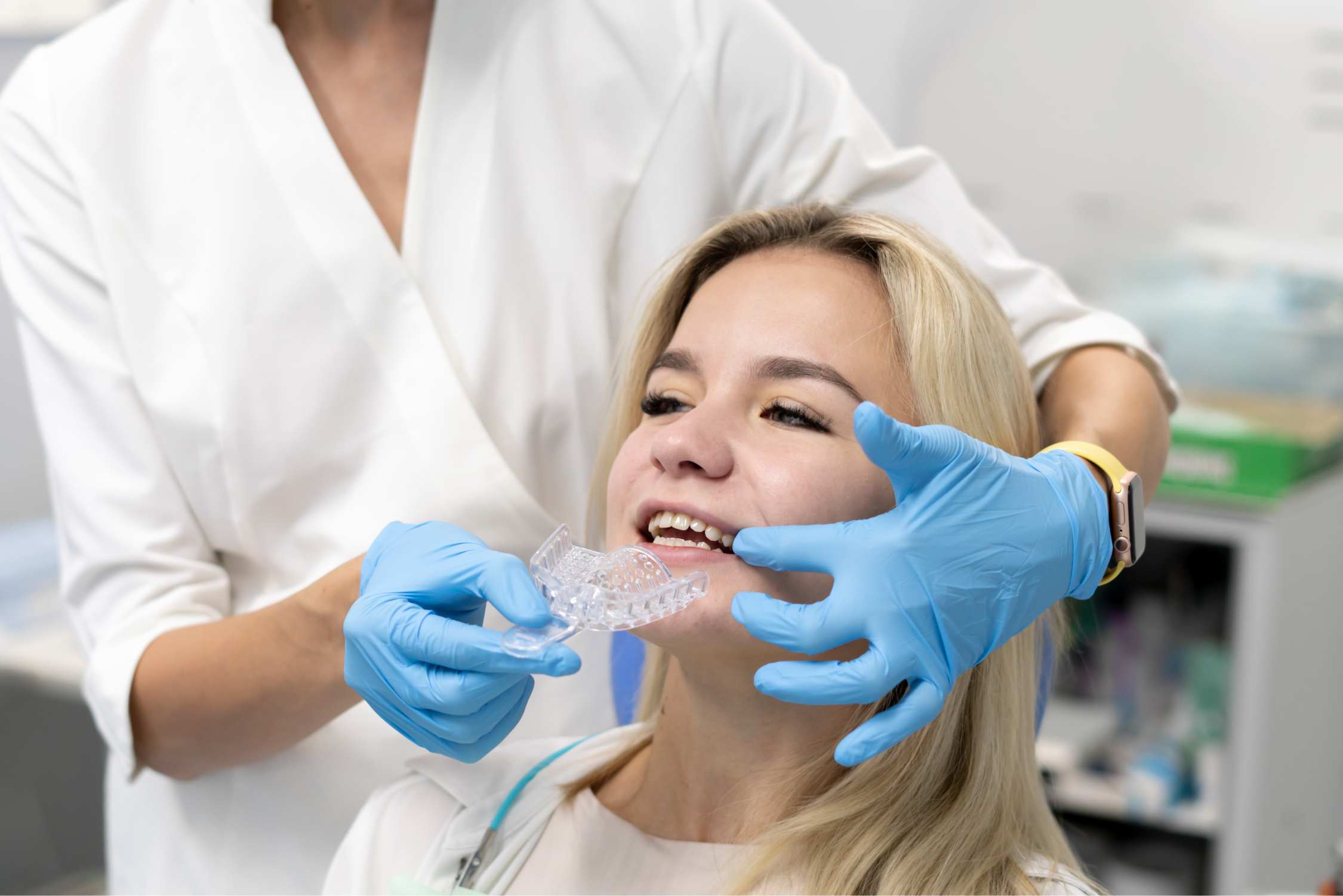
Invisalign treatment follows a planned sequence. Each aligner applies controlled pressure, so specific teeth move before the next tray takes over. When your teeth follow that plan, the aligners stay snug and progress remains predictable. When they do not, a small mismatch can grow from one tray to the next.
A tray may seem wearable even when one tooth has stopped moving as expected. For patients using Invisalign in Jericho while balancing school, work, sports, and commutes around Syosset, Hicksville, Plainview, and Westbury, noticing the warning signs early may prevent avoidable delays.
What Does Falling Behind Mean
Orthodontists often call this poor tracking. It means the position of one or more teeth no longer matches the shape programmed into the current aligner.
Invisalign says most patients wear their aligners for 20 to 22 hours daily, while total treatment time depends partly on case complexity and consistent wear. Missing a few hours once may not derail treatment, but repeated under-wear can leave teeth behind while the trays keep advancing.
Tracking problems are not always caused by patient habits. Difficult rotations, lost attachments, tray damage, bite changes, and differences in how individual teeth respond can also affect movement.
Signs Your Invisalign May Not Be Tracking
A thin space near the edge of a brand-new aligner can be normal during the first day. A gap that remains, grows, or appears in the same area through multiple trays is more concerning.
Look for an aligner that no longer sits fully over one tooth, a visible air gap near the biting edge, one side lifting when you bite down, or a tray that rocks and clicks. A missing attachment, a dramatically tight next tray, or a bite that suddenly feels uneven can also signal lost tracking.
General pressure after changing aligners is common. Sharp pain focused on one tooth is different and should be discussed with your orthodontist.
A Quick Invisalign Tracking Check
| What you notice | What it may mean | Best next step |
| Small gap on the first day | The tooth may still be settling | Follow your prescribed wear plan |
| Gap remains after several days | A tooth may be falling behind | Call before changing trays |
| Tray lifts near an attachment | The attachment may be loose | Schedule an orthodontic check |
| Next tray will not seat | Earlier movement may be incomplete | Do not skip forward or force it |
| Bite suddenly feels uneven | Movement may not be balanced | Request a clinical evaluation |
Why Invisalign Treatment Can Fall Behind
Long lunches, coffee breaks, dinners out, and forgetting to replace aligners after brushing can quietly reduce daily wear. A tray removed for “just a little while” several times can add up faster than expected.
A phone timer can help you track how long your aligners remain out. Carrying a clean, ventilated aligner case also lowers the chance of wrapping trays in a napkin and accidentally leaving them behind at a Jericho restaurant, school cafeteria, or office lunch.
Other causes need professional attention. An attachment may detach without causing pain. A canine may rotate more slowly than predicted. Teeth may require additional space, elastics, or a revised sequence.
Sometimes a new digital scan and refinement aligners are the safest way to restore control. Refinements do not necessarily mean treatment has failed. They allow the orthodontist to update the plan according to how your teeth actually responded.
What Not to Do When a Tray Stops Fitting
Do not jump to the next tray because the current one seems ineffective. The next aligner assumes the current movement has already happened.
Do not aggressively force a poorly fitting tray into place. Aligner seaters can help with minor seating when used as directed, but they cannot correct every tracking issue.
Do not return to an older tray or change your schedule without professional guidance.
Most importantly, do not wait through several tray changes hoping the problem disappears. A small tracking error is usually easier to manage than a mismatch discovered weeks later. Khan Orthodontic Group advises patients to seek help when trays stop seating fully, attachments become loose, aligners crack, or isolated pain develops.
How Professional Monitoring Protects Your Progress
Clear aligners are removable, but treatment should not be self-directed. Regular orthodontic visits allow the doctor to compare your teeth with the planned stage, inspect attachments, evaluate your bite, and decide whether the current tray should be worn longer.
Khan Orthodontic Group uses digital imaging and advanced computer technology as part of its orthodontic care. Dr. Sabeeh Khan and Dr. Azita Naghavi Khan each earned postdoctoral certificates in orthodontics from Columbia University and have provided orthodontic care since 1992.
Patients seeking Invisalign treatment in Jericho can meet our doctors or schedule a free smile consultation at the Jericho office. The practice serves patients from Jericho and surrounding Nassau County communities from its location at 500 North Broadway.
An early professional check is often much simpler than trying to recover after several mismatched trays.
Frequently Asked Questions (FAQ’s)
How do I know if my Invisalign is falling behind
Persistent gaps rocking trays loose attachments and aligners that will not seat fully can indicate poor tracking.
Should I change trays when the current aligner has a gap
No contact with your orthodontist before advancing because the planned tooth movement may not be complete.
How many hours should I wear Invisalign each day
Most patients wear Invisalign aligners for 20 to 22 hours daily unless their orthodontist provides different instructions.
Can an Invisalign attachment fall off without pain
Yes an attachment may detach with little discomfort and reduce the aligner’s control over a tooth.
Will I need to restart treatment if my teeth stop tracking
Usually not because longer wear replacement attachments or refinement aligners can often restore progress after an evaluation.