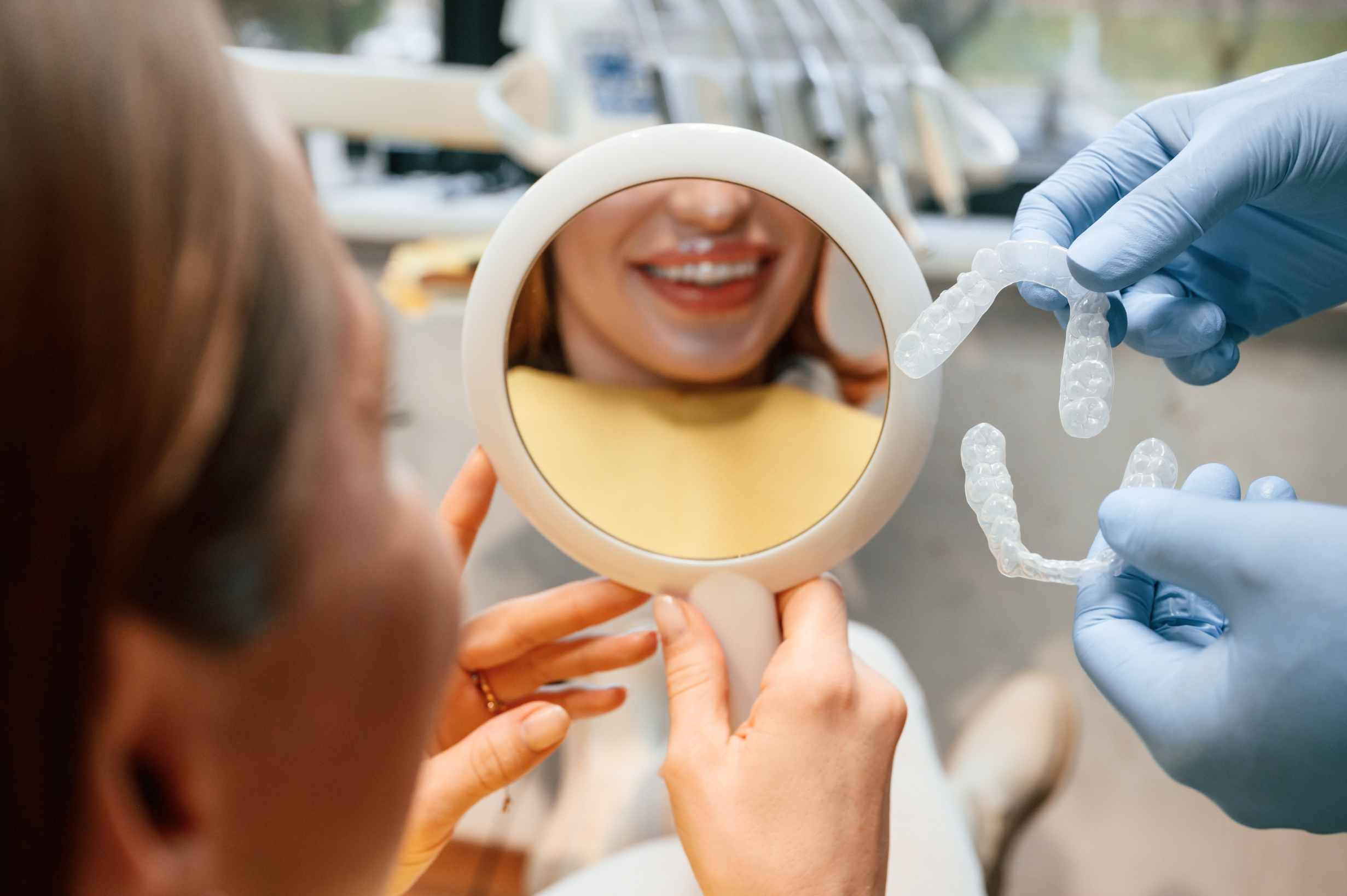
Teenagers often want straighter teeth without making treatment obvious. For parents researching Invisalign in Merrick, the main questions are practical: Will clear aligners work for my child’s bite? Will my teenager wear them consistently? How will treatment affect school, sports, meals, and oral hygiene?
Invisalign can be effective for many teenagers, but it is not right for every patient. An orthodontic evaluation is needed to assess tooth movement, bite, development, and the teen’s ability to follow instructions.
How Does Invisalign Work for Teenagers?
Invisalign uses a series of removable, custom-made clear aligners. Each set applies controlled pressure to selected teeth and gradually moves them toward the positions planned by the orthodontist.
Khan Orthodontic Group uses three-dimensional computer graphics and digital imaging to support customized Invisalign treatment planning.
Teenagers change aligners according to their orthodontist’s schedule. The American Association of Orthodontists advises that clear aligners typically need to be worn for about 20 to 22 hours each day, or as prescribed. Consistent wear is essential because aligners cannot work while out of the mouth.
What Problems Can Teen Invisalign Treat?
Clear aligners may be considered for:
- Crowded or overlapping teeth
- Gaps between teeth
- Certain overbites, underbites and crossbites
- Mild to moderate tooth rotations
- Teeth that shifted after earlier treatment
Clear aligners may be less predictable for severe bite problems, major rotations, large spaces or cases involving jaw growth. Braces or another orthodontic appliance may offer better control.
Parents should not choose based on appearance alone. An orthodontist must examine the teeth, bite and jaw relationship before recommending treatment. The practice outlines both options on its orthodontic treatment.
Is Your Teenager Ready for Clear Aligners?
The key difference between aligners and fixed braces is responsibility. Braces stay attached, while aligners work only when worn as directed.
Before choosing Invisalign, consider whether your teen can:
- Wear aligners for the prescribed hours
- Store them safely during meals
- Brush before reinserting them
- Keep track of each set
- Attend progress visits
- Report lost, damaged or poorly fitting trays
A responsible teenager may value this independence. A teen who struggles with routines or loses items frequently may need more support or fixed braces.
Parents should discuss their teenager’s habits honestly during the consultation. Choosing the most appropriate treatment is more important than selecting the least noticeable appliance.
How Does Invisalign Affect School, Sports and Social Life?
Clear aligners are discreet, so many teens feel comfortable wearing them in class, photographs and social settings. They are removed for meals, meaning there are fewer food restrictions than with braces.
Aligners should be placed in their case rather than wrapped in tissue or left on a lunch tray. A small care kit containing a toothbrush, toothpaste, floss and an aligner case can make the school routine easier.
Sports are generally compatible with aligner treatment, but aligners do not replace a protective mouthguard. For contact sports, the AAO advises removing aligners and wearing an appropriate mouthguard. Ask the orthodontist how to manage aligners and mouth protection for the teen’s activity.
What About Eating and Oral Hygiene?
Aligners are normally removed before eating and before drinking anything except plain water. Eating with them may damage or stain the material and trap food against the teeth.
Teens should brush and floss regularly and clean their aligners as instructed. Reinserting trays over food debris or sugary residue may increase plaque buildup, odor, cavities and gum irritation.
Parents may need to give reminders during the first few weeks until the routine feels familiar. Keeping an extra toothbrush at school and carrying the aligner case can make consistent care easier.
What Happens During the First Consultation?
The first consultation determines whether Invisalign is clinically appropriate. The orthodontist may examine the teeth and bite, review dental history, and take photographs, X-rays or digital scans when needed.
Useful questions include:
- Why are aligners recommended instead of braces?
- How long might treatment take?
- Will attachments or elastics be required?
- How often are progress visits needed?
- What happens if an aligner is lost?
- Will retainers be needed afterward?
Khan Orthodontic Group treats children, teenagers and adults and describes its approach as individualized. Information about the clinicians, their training and the technology used by the practice is available on our office page.
How Can Parents Help Treatment Stay on Track?
Regular check-ins can prevent avoidable delays. Ask whether the aligners fit properly, encourage your teen to store previous sets, and report damage or persistent discomfort promptly.
Do not advance to the next tray early or force an aligner that no longer fits. Contact the orthodontic office for guidance. The practice also provides advice on preparing for an orthodontic appointment.
Parents should encourage honesty rather than criticism. Knowing that an aligner was lost, damaged or not worn consistently helps the orthodontist recommend the appropriate next step.
Exploring Invisalign in Merrick for Your Teen
Invisalign may give suitable teenagers a discreet and flexible way to improve tooth alignment, but success depends on accurate diagnosis, customized planning, good hygiene and consistent wear. A consultation can determine whether aligners or braces are the more predictable option.
Families considering Invisalign in Merrick can request an appointment with Khan Orthodontic Group at its Merrick location.
Frequently Asked Questions (FAQ’s)
At what age can a teenager start Invisalign?
Suitability depends more on dental development and treatment needs than on one fixed age.
How many hours should teens wear Invisalign?
Most are advised to wear aligners for approximately 20 to 22 hours daily unless told otherwise.
Can teenagers eat while wearing Invisalign?
Aligners should generally be removed before eating and before drinking anything except plain water.
What happens if my teen loses an aligner?
Contact the orthodontist promptly instead of automatically changing trays or stopping treatment.
Will my teenager need a retainer afterward?
Most patients need retainers to help maintain corrected tooth positions after active treatment.