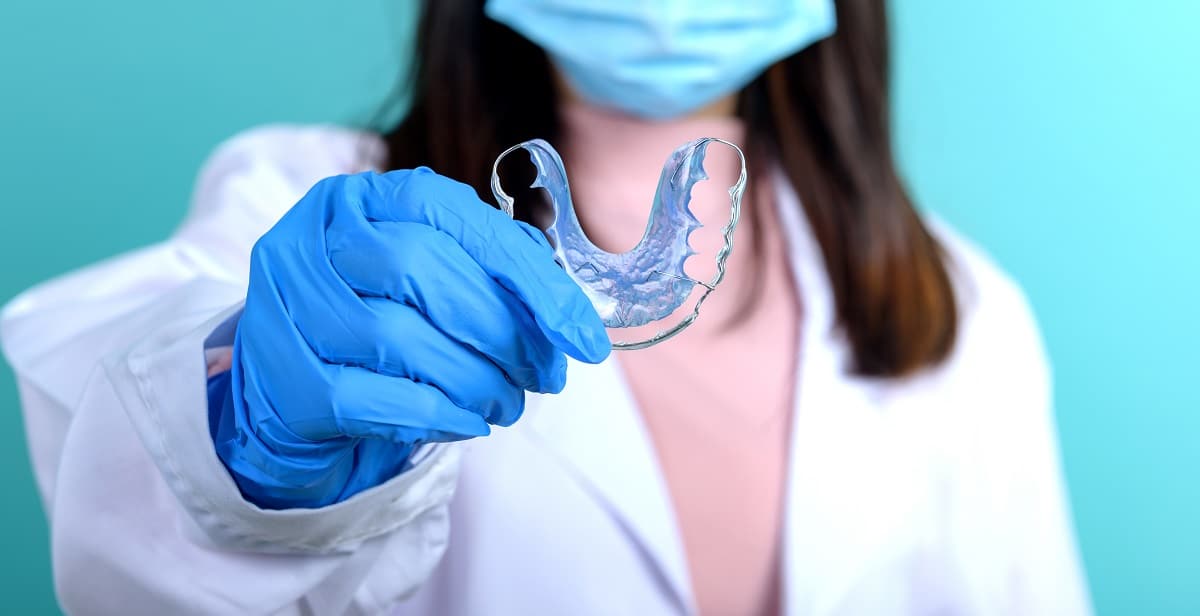
Between packed school calendars, long commutes, and everything else that fills a typical Long Island week, wearing a retainer can quietly fall off the routine. It usually starts small. A missed night turns into a few weeks, and then one day, you notice something feels off. Maybe your bite doesn’t sit the same. Maybe a front tooth looks slightly rotated in photos. By the time patients reach out, they are often unsure whether this is minor or something that requires starting over.
Dr. Sabeeh Khan and Dr. Azita Khan of Khan Orthodontic Group focus on individualized orthodontic care with years of experience treating both first-time and relapse cases. Their approach centers on clear communication, realistic treatment planning, and helping patients avoid unnecessary retreatment whenever possible.
Contact Khan Orthodontic Group to get a clear, honest assessment and explore the most efficient path forward. We work with patients across Long Island and New York City, including Jericho, Merrick, and Maspeth, making it easy to find care that fits your routine.
What actually happens when you stop wearing your retainer
In the first phase after braces or aligners, your teeth are not fully “set” in place. The bone and surrounding fibers need time to stabilize. Retainers are not just maintenance tools. They are part of the treatment itself.
When retainer wear stops, those fibers begin pulling teeth back toward their original positions. This is why relapse often looks familiar. Crowding returns where it existed before. Small rotations come back in the same teeth that were previously corrected.
Patients searching for an orthodontic evaluation near me often expect something dramatic, but what we usually see first is subtle:
- A slight overlap of the lower front teeth
- A small gap is reopening
- A bite that feels uneven when chewing
At this stage, intervention is usually simpler than most people expect.
The difference between minor shifting and true relapse
One of the biggest misconceptions is that any movement means you need braces again. That is not always the case.
Minor shifting typically involves:
- Less than a millimeter of movement
- Slight tightness when trying to reinsert a retainer
- Changes that are more visible to you than to others
In these cases, a new retainer or minor adjustment may be enough.
True relapse, on the other hand, often includes:
- Noticeable crowding or rotation
- Changes in bite alignment, not just tooth position
- Retainers no longer fitting at all
This is where structured orthodontic treatment may be needed again, though often not as extensive as the first time.
Patients we see across our Jericho, Maspeth, and Merrick offices often assume they have crossed into the second category when they have not. That assumption alone leads to delays that make the situation worse.
Why waiting makes correction harder and more expensive
Relapse does not happen overnight, but it does progress.
A small alignment issue that could have been corrected with a retainer adjustment can evolve into a case that requires aligners or braces. The longer the teeth remain in the wrong position, the more the surrounding bone adapts to that position, correcting slower.
What we consistently observe is this pattern:
- Patients notice early shifting
- They wait to “see if it gets worse”
- By the time they act, options are more limited
This is where timing directly affects cost and treatment duration.
Can you just start wearing your old retainer again?
This is one of the most common questions we hear.
If the retainer still fits with slight pressure, wearing it consistently may help guide teeth back slightly. However, forcing a retainer that no longer fits can cause damage or uneven pressure.
Signs your old retainer is no longer appropriate:
- It does not fully seat on your teeth
- It causes significant pain beyond mild pressure
- It leaves visible gaps when worn
In these cases, continuing to use it is not corrective. It is potentially harmful.
What orthodontists actually recommend in these situations
When patients come in for an orthodontic evaluation at our practices in Jericho, Maspeth, and Merrick, NY, the goal is not to restart treatment by default. The goal is to match the least invasive solution to the level of movement.
Depending on what we see clinically, options may include:
- A new custom retainer designed to recapture minor movement
- Short-term clear aligner therapy for moderate relapse
- Limited braces targeting specific teeth instead of full treatment
What surprises most patients is that retreatment is often shorter and more targeted than their original experience.
Invisalign vs braces for relapse cases
Many patients assume that braces are the only way to fix shifting after neglecting a retainer. That is outdated thinking.
Clear aligners are often highly effective for relapse because:
- The teeth have already been moved once
- The biological response tends to be more predictable
- Treatment goals are usually more focused
However, braces may still be recommended in cases involving:
- Significant bite changes
- Rotations that aligners cannot easily control
- Structural issues that go beyond alignment
The right approach depends entirely on how much movement has occurred.
The behavior pattern orthodontists see most
Across our Jericho, Maspeth, and Merrick offices, there is a consistent pattern that stands out more than any clinical detail.
Patients delay because they feel:
- Embarrassed about not wearing their retainer
- Unsure if the issue is “serious enough”
- Concerned about cost or time commitment
What ends up happening is that a fixable situation becomes more complex than it needed to be.
From a clinical standpoint, early intervention is not about urgency for its own sake. It is about preserving simpler options.
When it is still an easy fix
If you are noticing:
- Slight crowding returning
- A retainer that feels tighter than usual
- Small visual changes in photos
There is still a strong chance that the correction will be straightforward.
These are the cases where patients are often surprised at how minimal the solution is once they are evaluated.
A practical next step
If you have noticed changes but are unsure what they mean, the most useful step is a professional evaluation rather than guessing. At Khan Orthodontic Group, we help patients understand exactly where they stand and what level of correction, if any, is needed. We see patients across Jericho, Maspeth, and Merrick, NY, and many are relieved to find that their situation is more manageable than they expected.
We see this situation every day, and it is rarely as straightforward as patients assume. Not every case of shifting means starting over, and not every delay leads to major treatment. What matters is understanding what is happening early enough to keep your options open. Our role is to guide you through that decision with clarity, not pressure, so you can move forward with confidence based on what your teeth actually need.
FAQs
How quickly do teeth shift after stopping retainer use?
Movement can begin within weeks, especially in the first year after treatment. The speed varies, but early shifts are often subtle and easy to miss.
Can I fix shifting teeth without braces?
Yes, in many mild to moderate cases, retainers or clear aligners can correct the issue without full braces.
Is it too late to fix my teeth if they have shifted?
It is rarely too late, but delaying reduces the number of simple treatment options available. Earlier evaluation typically means shorter treatment.
Will I need the same length of treatment again?
Usually not. Retreatment is often shorter because the teeth have already been moved once, but it depends on how much relapse has occurred.
Does Invisalign work for relapse after braces?
In many cases, yes. Invisalign is commonly used for relapse correction, especially when changes are limited to alignment rather than bite.
What happens if I ignore shifting teeth?
The movement will likely continue, and correction may require more comprehensive treatment later.
Can a new retainer fix everything?
Only if the movement is minimal. Retainers maintain position or correct slight shifts, but they cannot fully reposition teeth once relapse progresses.
Why do teeth move even after successful braces?
Teeth naturally tend to return toward their original positions due to memory in the surrounding fibers and ongoing changes in the jaw over time.